
[ad_1]
By
Peter Margasak
·
November 06, 2025
The taxonomy of contemporary classical musicânew music, contemporary music, whatever you want to call itâis a thorny issue. But every month, weâll take a look at some of the best composer-driven music to surface here on Bandcampâthat which makes room for electronic experimentation, improvisation, and powerful takes on old classics.
Cheryl Duvall
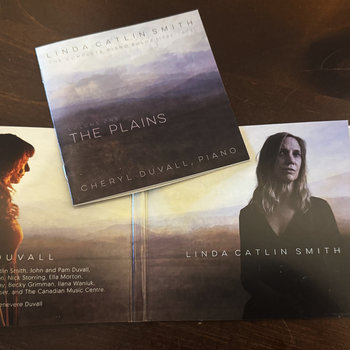
Linda Catlin Smith: The Complete Piano Solos (1989-2023), Volume 1- The Plains
Vancouver, British Columbia
Vancouver, British Columbia
The music of composer Linda Catlin Smith is marked by a persistent but unhurried sense of inquiry as elusive melodic patterns drift, fracture, and mutate with exquisite patience. Itâs clearly something the Canadian pianist Cheryl Duvall has noticed, because she decided to approach Smith about writing her a piece for a project of long-form solo works she began commissioning in 2019âan endeavor for which we should be grateful. The pianist has a strong connection to the composer, first as a student of hers in the early â00s and then as a devoted interpreter of her work. She gives Smith prominent space in the repertoire of the Thin Edge New Music Collective, the ensemble Duvall co-founded with violinist Ilana Waniuk in 2011âincluding the commission of the chamber work Dark Flower, the title piece on its 2023 Smith portrait album. The Plains is a 67-minute meditation of stark beauty and lyric ambiguity, at once taciturn in its emotional content but unabashedly human in its introspective vulnerability. Shifting threads unfold slowly, and Smith embraces the way some of them go adrift. In the sharply observed liner note essay by Nick Storring, the composer recalls her delight at repeatedly getting lost in Venice on a trip with her brothers years ago. Sometimes, when a new direction is taken, Smith indicates the shift with a brief silence, rejecting perfunctory transitions because, âI donât need lesser material.â No less exciting than the appearance of this new work is the revelation that The Plains is the first in a projected four-volume series from Duvall, collecting all of the composerâs solo piano music.
Mark Fell
Psychic Resynthesis
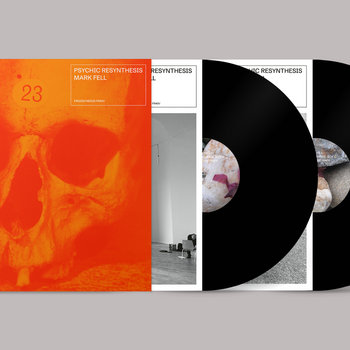
Composer and electronic musician Mark Fell holds great contempt for the conventional classical music score, which presents a conundrum for his growing number of collaborations with new music groups. He found a great fit with Englandâs Explore Ensembleâone of Europeâs most interesting, curious, and agile performing unitsâinventively drawing on the unique languages of each musician, and enlisting them to create modular building blocks for the 10 movements that comprise Psychic Resynthesis. Fell met with each musician, cataloging an array of familiar and more bespoke extended techniques to use as a raw material for the piece. He recorded each musician individually in the studio, asking them to play minor gestural permutations of each technique, cataloging âseven behavioral modulesâ from the six ensemble members featured on the recording. As he explained in an interview published by Tone Glow, âThey were able to practice their little bits, but they couldnât collectively rehearse this work. And because the score is sacrosanct in Western classical musicâit would say on the score that rehearsal is forbiddenâif they did rehearse, they werenât actually performing the piece since they didnât abide by it.â After making those recordings Fell created shifting combinations of those seven modules for each movement. Some of them excluded certain musicians, others required certain players to combine different modules in the same piece, making each performance of the work unique. Although the work has been performed a few times, for this recording Fell either trusted his instincts or surrendered to blind chance when creating those combinations. In some ways, this method echoes the way composers like Ãliane Radigue or Pascal Criton work directly with musicians to create something borne out of their individual sound worlds; but then Fell departs from the practice by providing the timeline combinations. Itâs stunning, a mysterious, somewhat aleatoric dance of sounds that convey their own peculiar logic.
Travis Laplante
String Quartets
It feels like a growing number of composers have been embracingâor at least exploringâthe sonic possibilities of using just intonation, a tuning system in which the intervals in a scale are derived whole number ratios. Many such pieces privilege the harmonic experience above all else. But with this pair of string quartets, composer-saxophonist Travis Laplante uses the system as the environment for his deeply melodic, often sentimental writing. Performed with typical precision and nuance by JACK Quartet, the music unfolds with transparent drama, a blend of pattern-based minimalism and maximalist drama. Laplante chose to eschew titles for the works to avoid telegraphing meaning, preferring to let the listener fill in such blanks. Each two-movement composition positions Laplanteâs vivid contrapuntal writing front and center, traveling between slashing rhythmic figures and lilting solo lines that seem designed to pull heartstrings, creating an unexpected and unusual contrast between the harmonies. This might seem askewâif not discordantâto those unfamiliar with the tuning, with some of the florid melodies veering into the maudlin. Laplante doesnât hide that aesthetic ingredient, which often emerged in his superb saxophone quartet Battle Trance. That emotional content feels genuine, but the remarkable harmony provides enough ballast to maintain an essential tension throughout.
Carrie Frey
Seaglass: Works for String Quartet
Violist Carrie Frey long ago established herself as one of the finest interpreters of contemporary music in New York, both as a solo artist and, since 2020, as a key member of the string quartet the Rhythm Method. In recent years, her abilities as a composer have started to catch up to her reputation as a player, and on this portrait album by the Rhythm Method her development has never been clearer. Through her membership in the ensemble she has formed a natural affinity for its strengths and aesthetic tendencies, including its frequent use of vocals. Synchronized shouts and mysterious murmuring turn up in the opening work âA chorus like distant screaming,â a piece that toggles between wonderfully jarring counterpoint, vigorously ascending unison lines, and tendrils of melodic tenderness. Voices also play a prominent role on âLATHEâ; following a sequence of brittle two-stroke gestures and warped microtonality the musicians start chanting the text âWhen I love you then you leave me and the time comes to be far away from you,â steadily accelerating the tempo and elevating the pitch of the repeated passage as if it was a sped-up tape. My favorite piece is âGone/Back,â which, like most of the pieces here, embraces its own non-linear structure, moving between different points of referencesâmusic by Chopin and Duke Ellington trumpeter/violinist Ray Nance, and Italo Calvinoâs book Mr. Palomarâfurther enhanced by some impressive improvised passages.
Nick Joz
Hieroglyph & Stuttering
Bassist Nick Joz (née Jozwiak) has been a steady collaborator of trumpeter Peter Evans in the quartet Being & Becoming, but on this wonderfully jarring project he taps into multi-pronged interests in composed, experimental, and electronic music. The title of the album lays out the twinned approaches that define the music. The recording opens with one of the âstutteringâ pieces in which the leader gathered some of the most idiosyncratic and compelling instrumentalists of our timeâtrumpeter Evans, violist Joanna Mattrey, and clarinetist John McCowenâfor a series of group improvisations based on loose parameters from the composer. Each track was recorded in isolation, a necessary choice for the subsequent post-production by electronic musician Mark Gardner, who manipulated those individual tracks, transforming them with his own modular synthesizer rig. Finally, Joz edited and shaped these elements into abstract compositions, sometimes further appending the music with cello overdubs. The âhieroglyphâ pieces are shorter âfields of colorâ vignettes, more fixated on timbre and texture than conventional development. They are interleaved within the lengthier edited pieces, and could almost be seen as palate cleansers if they werenât so dense and thorny in their own way. Too often, improvisation is positioned as the obverse of construction; but this strain of spontaneous composition rejects that supposition, while giving these advanced musicians great agency in reacting to what surrounds them in real time. Joz presents a fantastic decimation of that old fashioned, polarized thinking.
Various Artists
Música Electroacústica Mexicana
There are countless recordings that seem lost to time, albums released locally in small batches well before the internet granted broad access to music. This obscure collection of Mexican electroacoustic music from 1984 certainly fits that bill, and original copies of the vinyl go for hundreds of dollars. Unlike many such rarities, which donât have much going for them apart from their scarcity, this collection is a gem, capturing four pieces that not only sound utterly fresh four decades later, but which in hindsight offer a prescient view of future electronic music. Itâs important to note that this work was created under difficult conditions in Mexico, during an era where any traces of experimental culture were forced to the margins, with the featured composers often using far more primitive equipment than their counterparts around the globe. The opening 1981 piece âPara Espacios Abiertosâ by Antonio Russekâwho remastered the original tapes for this editionâis worth the price of admission on its own, a lacerating journey of noise, drone, percussive effects, and music box-like melodic shards. While the other works arenât quite as penetrating, thereâs plenty to appreciate in the hazy, spaced-out forms of âFantasia Cosmicaâ by Raúl Pavón, who built the first synthesizer in Mexico in the 1960s; the trippy, two-part oscillator inventions in âAgua Derramadaâ by Roberto Morales Manzanares; and the abstract electroacoustic splatters, fractures, thwacks, and collisions of âVulcanâ by Vicente Rojo, who built the piece from material generated at GRM in Paris.
Scott Wollschleger
Lost Anthems
Commissioned by violist Leilehua Lanzilotti for her 20/19 projectâan endeavor to expand the contemporary repertoire for the instrumentâLost Anthems is a bracing, rapid-cut sonic sojourn by Scott Wollschleger. The piece puts serious demands on the violist and pianist David Kaplan, her duo partner, as they traverse 15 contrasting yet linked sections. The construction creates a kind of jarring back-and-forth of changing minimalist gestures that brings loads of variation to a ping-pong structure between ethereality and physicality. The composer had initially included the subtitle âSongs intended to bring people together but after there are no people left to bring together,â which indicates some of the darkness strewn across the piece; but at the same time, thereâs something exhilarating about this performance. There are tightly-coiled rhythmic passages, with the prepared piano highlighting the instrumentâs classification as percussion. Left-handed tones tangle with metallic preparations in the upper register, while the violinist staggers between throaty and piercing double stops, suggesting instability with impressive precision. The duo toggle suddenly and sharply to more contemplative passages where the sounds feel more spectral, elusive, and haunted. Yet within that back-and-forth structure there are all kinds of substantive variationsâshifting rhythms, viscous harmonics, and bruising articulations. The composerâs interest in sound is palpable, but he doesnât disregard narrative or movement. Even at 25 minutes, it feels utterly complete, taking the listener on a ride that is full of surprises.
David First
Revolutions
In her perceptive liner note essay for this monumental new work by guitarist and composer David First, fellow composer-performer Sarah Hennies explains her encounter with Revolutions as âa feeling not unlike my time spent in record stores and music libraries as a teenager, suddenly confronted with a massive universe I hadnât yet been aware of but was always there waiting to be discovered.â Thatâs because First has built a music career through instinctive discovery and curiosity, moving from the Philadelphia no-wave band the Notekillers through free improvisation, electronic music, minimalism, and an abiding interest in the physicality of sound. In recent years, heâs deftly blended those interests within music written for his ensemble The Western Enisphereâwhose disparate membership mirrors the composerâs disregard for stylistic purityâwith Revolutions establishing a new apotheosis. Composed using just intonation, the work deploys a specific set of harmonics in G, colliding the visceral fury of rock music with the meditative longform harmonies of contemporary music. First is a composer who has long rejected hierarchies and canon, following his gut to generate a heady drone that hides within its static form a swirling, sparkling movement, as the various ensemble voices engage in a slow glide through microtonal sequences. A monolithic organ tone functions as a prismatic foundation, a molasses-slow churn of shifting textures, kaleidoscopic beating patterns, radiating harmony, penetrating pulsations, and psychoacoustic wonder, a sonic ant colony billowing under an unassuming mound of sound.
EÌliane Radigue
Asymptote Versatile (1963â64)
The later music of French composer Ãliane Radigue captured a shift to writing for conventional instruments following decades of long-form pieces for feedback and analog synthesizers. In fact, until the release of this new recording, almost no one had heard her early work before she turned to electronics. Welsh harpist Rhodri Davies has been one of her most stalwart collaborators since she launched her powerful series Occam Ocean in 2011, gaining enough trust to not only gain access to Radigueâs earliest surviving workâAsymptote Versatile from 1963â64âbut to mount its first-ever performance. Davies honors Radigue with this recording of that 2023 premier at Huddersfield Contemporary Music Festival, performed by a superb 12-piece ensemble which included several other Radigue collaborators, such as violist Julia Eckhardt, clarinetist Carol Robinson, and violinist Angharad Davies. The work is a graphic score featuring a series of logarithmic curves based on the Fibonacci sequence, each inscribed on separate, overlaid sheets. As Eckhardt explains in her liner note essay, âan asymptote is a geometrical figure in which two lines will touch only in infinity.â This idea is manifest in a collection of extended pitches veering in and out of register, a study of unresolved harmony and linear interaction that contains nearly all of the concepts that have sustained Radigueâs singular work for the last six decades. As Eckhardt also notes, when she wrote it the composer had no access to such a group of musicians, so by necessity the work existed only in her imagination until now. Not only does the piece deliver and provide fascinating historical context, but more importantly it sounds just as vibrant as any new music Iâve heard this year.
Theo Alexander
Stable Processes with Slow Ornaments
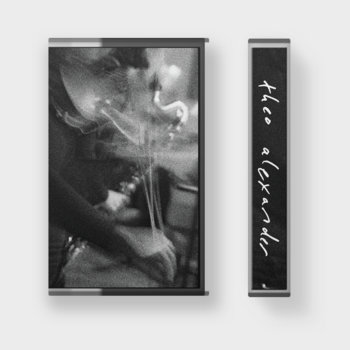
This is one of four albums in the terrific inaugural batch of releases from Flung, a new UK-imprint operated by Nicholas Moroz, a composer and director of the excellent Explore Ensemble. Theo Alexanderâs Stable Processes with Slow Ornaments blurs the line between performance and sound installation: bass clarinetist Charlotte Jolly and violist Meghan Cassidy play fuzzy long tones while moving around eight different stations located in the performance space, evoking Luigi Nonoâs classic No hay caminos, hay que caminar. At each, they encounter sections of the score, as well individual cassette players transmitting a mixture of sampled church organ and vibraphone. The entire piece emerges from a gauzy scrim of white noise, as the blurred definition of each articulated sound levitates and blends in a meditative aura more about atmosphere than narrative. The dance between the various elements is endlessly beguiling, with the abstract gestures voiced by Jolly and Cassidy moving in and out of focus, alternating between palpable gestures with minimalist patterns and degraded tones. The whole thing arrives a kind of lush fever dream, drifting from dream state to bracing sentience.
[ad_2]
The Best Contemporary Classical Music on Bandcamp, October 2025